
Agencies that run dozens of AI agents need a pricing model that matches their growth. One wrong plan can blow your budget or lock you out of features. In this short‑list we break down the six most common multi‑instance pricing approaches and show how they affect cost, flexibility and control. By the end you’ll know which model fits your agency’s cash flow, client contracts and scaling roadmap.
1. Per‑Instance Flat Pricing , Simple Predictability
With per‑instance flat pricing you pay a fixed amount for every AI agent you spin up. The price never changes no matter how much the agent talks, how many API calls it makes, or how much data it stores. This makes budgeting a breeze because you can multiply the per‑instance fee by the number of agents you plan to run.
For agencies that bill clients per‑project, flat fees map directly to a line‑item on the invoice. If a client needs three agents, you simply add three times the unit price. The model also keeps cost‑to‑value calculations straightforward: cost = unit price × instance count.
Industry guidance on multitenant pricing notes that flat‑rate models are easy to implement but can become costly if you scale aggressively without volume discounts. The trade‑off is higher predictability versus potentially paying more as you add agents.
Real‑world tip: set a ceiling on the number of instances per client to avoid surprise overruns. Many agencies cap a client at five agents unless the contract explicitly adds more.
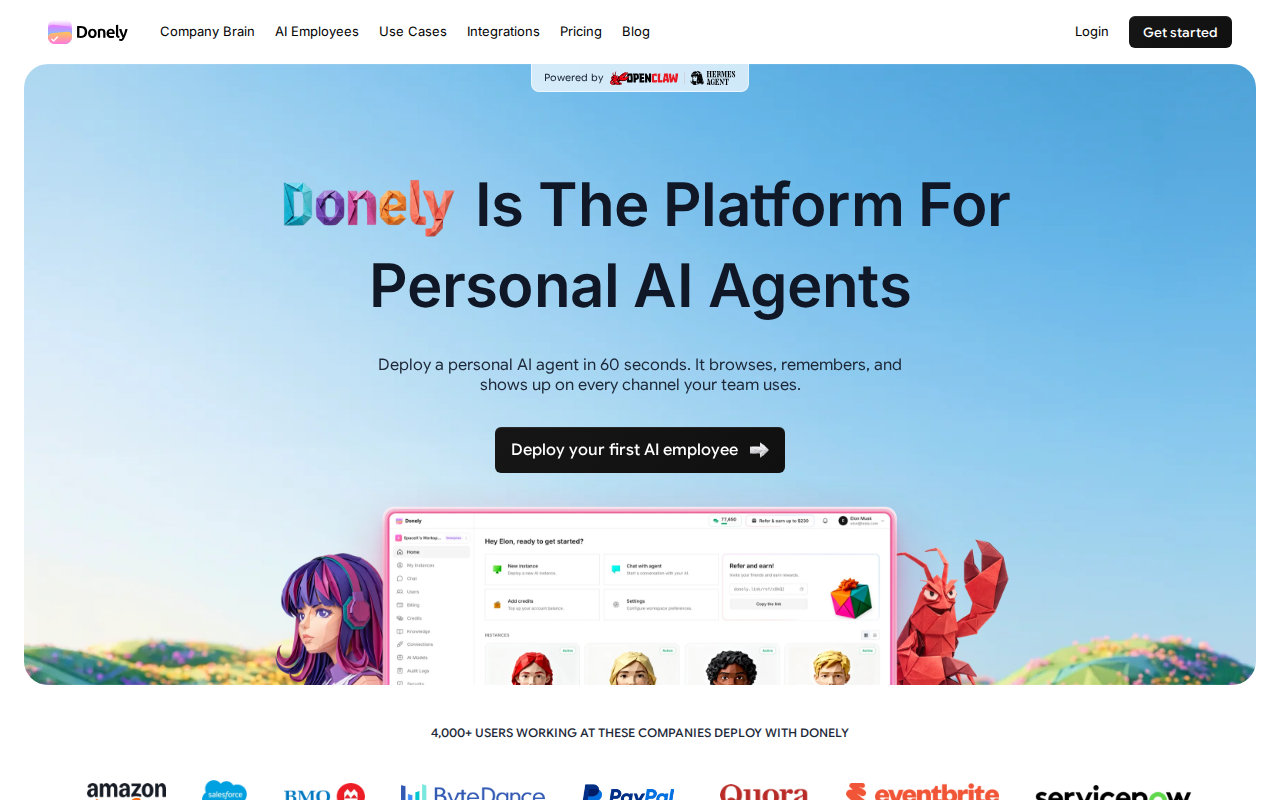
Donely’s own pricing page shows a clear per‑instance flat rate (Personal $25/mo per instance, Team $50/mo per instance). Because the rates are public, you can run the spreadsheet instantly. Best Per‑Instance Billing Models for Agencies
Bottom line: flat pricing wins when you need zero‑surprise invoices and your instance count stays modest.
2. Usage‑Based Pricing , Pay for What You Use
Usage‑based pricing ties cost directly to the amount of work each AI agent does. Think of it as a utility bill: you pay for API calls, data processed, or minutes of runtime. This model shines for startups that want to start small and only pay as they grow.
Because you only pay for actual consumption, the barrier to entry is low. A new client can launch a single proof‑of‑concept agent for a few dollars and scale up only when the project proves ROI.
A billing platform’s guide to usage‑based billing explains that you first pick a metric (e.g., API calls), then track it in real time, and finally bill at the end of the period. The model also lets you offer spending caps or prepaid credits to keep customers from shocking bills.
However, revenue becomes less predictable. If a client’s agent spikes due to a marketing campaign, the bill can jump dramatically. Finance teams often ask for caps or volume discounts to tame that volatility.
Imagine a digital agency that runs a chatbot for a seasonal sale. During the sale the bot handles 10× more requests, and the usage‑based bill triples. The agency can avoid surprise by setting a usage cap that triggers a notification when consumption reaches 80% of the monthly budget.
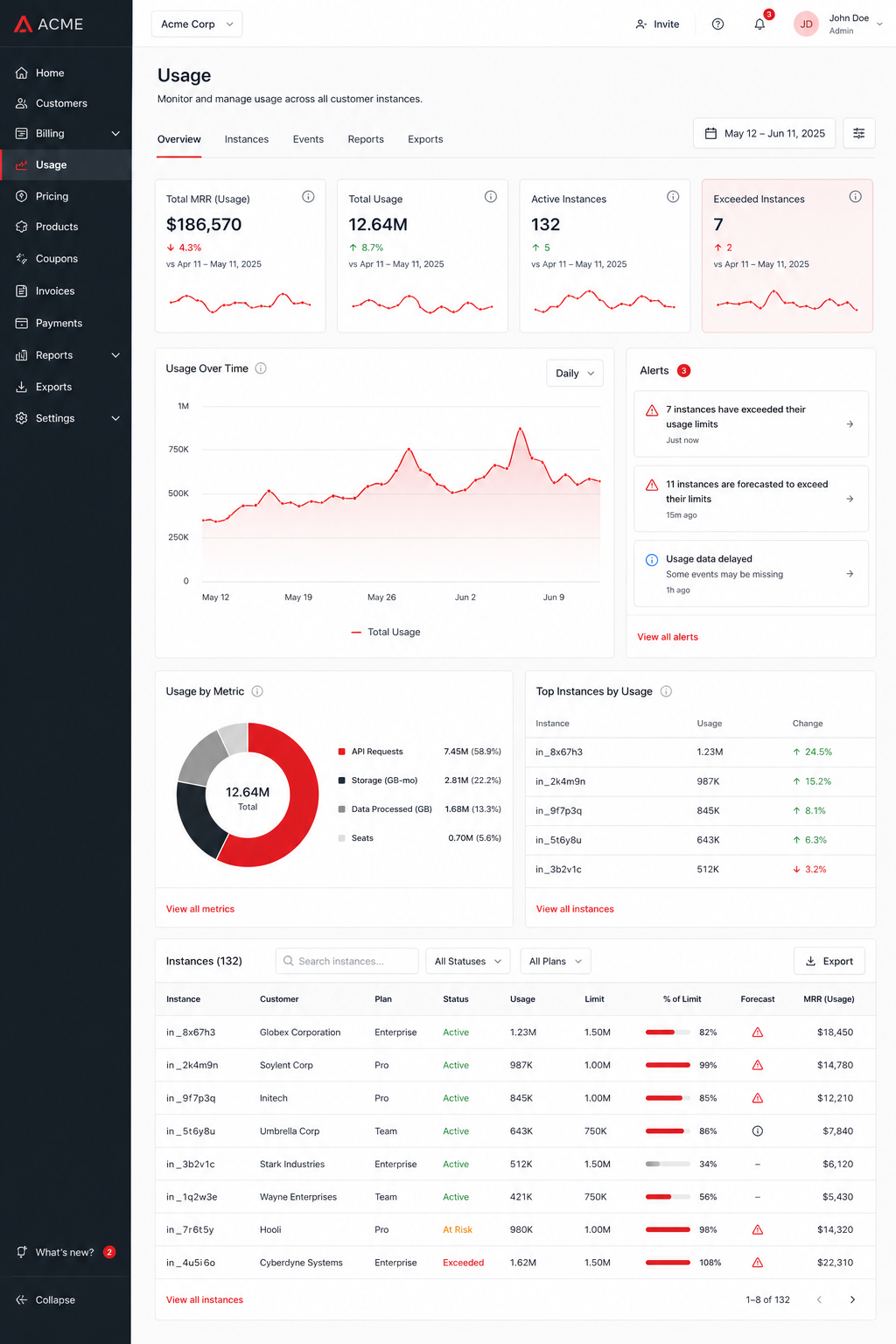
For agencies that need fine‑grained cost control, usage‑based pricing pairs well with a monitoring dashboard that shows per‑instance usage in real time.
Key takeaway: usage‑based pricing aligns cost with value, but you must build alerts and caps to keep budgets in check.
3. Tiered Per‑Instance Pricing , Volume Discounts
Tiered pricing offers a set price per instance that drops as you buy more. For example, the first 10 agents might cost $30 each, the next 10 cost $27 each, and any beyond 20 cost $25 each. The idea is to reward agencies that scale up quickly.
Tiered plans are common in SaaS because they give a clear path from starter to enterprise without a sudden price jump. Agencies can forecast cost by mapping their projected instance growth onto the tier table.
An article on SaaS pricing strategies from a major industry source explains that tiered pricing helps balance accessibility for small clients while still extracting value from larger customers. The model also reduces churn because clients feel they’re getting a discount as they grow.
Usable steps to set up tiered pricing:
- Define clear thresholds (e.g., 1‑10, 11‑25, 26+ instances).
- Calculate the per‑instance cost for each tier so the overall revenue curve stays healthy.
- Communicate the discount structure on the pricing page to avoid confusion.
Donely applies automatic volume‑discount ladders that kick in once a customer passes a certain instance count. This means agencies can start with a few agents and see the price per agent drop as they add more, keeping margins stable.
When you compare tiered pricing to flat per‑instance pricing, ask yourself: will my client base stay under 10 agents, or will they quickly move to 30‑plus? If the latter, tiered discounts can save a lot of money.
Bottom line: tiered pricing gives a predictable discount curve, which is ideal for agencies that expect rapid client expansion.
4. Percentage‑of‑Revenue Pricing , Aligned Incentives
Percentage‑of‑revenue pricing ties your fee to a slice of the client’s earnings generated by the AI agents. If your bot drives $10,000 in sales, you might take 5 % of that revenue.
This model aligns incentives: the more value you create, the more you earn. It’s popular for performance‑driven agencies that want to prove ROI.
Industry benchmarks define revenue‑share models as “a percentage of the income generated by a product or service that is paid to a partner”. The model works best when you have solid attribution data that can prove the agent’s contribution to revenue.
Pros:
- Clients pay only when they see results, lowering upfront risk.
- Agency and client share the upside, fostering partnership.
Cons:
- Revenue attribution can be messy, especially across multiple channels.
- Cash flow for the agency can be irregular, depending on client payment cycles.
Real‑world example: a marketing agency runs a lead‑gen chatbot for an e‑commerce brand. The chatbot helps close $50,000 in sales in a month. At a 7 % revenue share, the agency earns $3,500, more than a flat $500 retainer would have paid.

Key takeaway: revenue‑share pricing works when you have airtight tracking and can tolerate variable cash flow.
5. Hybrid Models (Base + Usage) , Best of Both Worlds
Hybrid pricing blends a modest fixed base fee with a usage‑based add‑on. You might charge $200 per month for up to 5 k API calls, then $0.01 per additional call.
The base fee guarantees a minimum revenue stream, while the usage component lets the client scale without renegotiating contracts. It’s a sweet spot for agencies that need predictability but also want to reward growth.
Industry research from 2024 shows hybrid models are rising as companies seek stability and scalability. The model also simplifies upselling: you can increase the usage rate or raise the base fee as the client matures.
Implementation checklist:
- Define a clear baseline (e.g., 5 k calls, 100 GB storage).
- Choose a usage metric that reflects value (API calls, minutes, rows processed).
- Set transparent overage rates and caps to avoid bill shock.
Donely’s pricing page combines a flat per‑instance fee with optional usage‑based credits for high‑volume customers, illustrating a real‑world hybrid approach.
Bottom line: hybrid models give you a safety net while still letting revenue grow with usage.
6. Flat Rate for Unlimited Instances , All‑You‑Can‑Eat
Some platforms bundle every instance into a single unlimited plan. You pay one price and can spin up as many agents as you need.
This model is attractive for agencies that run dozens of client bots and hate per‑instance accounting. Budgeting becomes trivial: one line item covers everything.
The downside is that you may end up paying for idle capacity. If you only need ten agents but the unlimited plan costs the same as a tiered plan for fifty, you lose efficiency.
A well‑known SaaS pricing page demonstrates a flat‑rate approach where the Enterprise tier includes unlimited users and features. While not an agency‑focused AI platform, it shows how a single price can cover unlimited usage.
When evaluating an unlimited plan, ask:
- What is the average number of instances you run today?
- How fast will that number grow in the next 12 months?
- Does the vendor offer volume‑discounted unlimited tiers for large enterprises?
Donely offers an Enterprise tier that provides truly unlimited instances, plus SSO, dedicated support, and compliance guarantees. For agencies that already have a high instance count, the unlimited tier can simplify billing and reduce admin overhead.
Pro tip: run a 90‑day pilot with the unlimited plan and track instance utilization. If you consistently use less than 60 % of the capacity, consider moving back to a tiered model.
How to Choose the Right Pricing Model
Picking a model isn’t a one‑size‑fits‑all decision. Start by mapping three key factors: client billing preferences, your cash‑flow needs, and projected instance growth.
First, ask the client: do they prefer a predictable monthly invoice or a pay‑as‑you‑go bill tied to results? Second, look at your own revenue forecasts – a flat base fee smooths cash flow, while usage‑based models can create spikes. Third, model instance growth over 12‑month horizons using a simple spreadsheet or a SaaS pricing calculator for multi-instance billing; see where each pricing curve intersects your profit targets.
Finally, run a quick A/B test with two pricing structures on a small set of clients. Measure churn, average revenue per client (ARPC) and operational overhead. The model that yields the highest ARPC with the lowest admin load wins.
Frequently Asked Questions
What’s the biggest risk of per‑instance flat pricing?
The main risk is overpaying as you scale. If you add many agents, the total cost can grow linearly, and you lose the cost‑saving benefits of volume discounts. To mitigate, set tiered discounts or a usage cap that triggers a review of the pricing plan.
Can usage‑based pricing work for long‑term contracts?
Yes, but you need clear reporting and caps. Offer a minimum base fee to guarantee revenue, then bill the extra usage. This hybrid approach gives the client predictability while still rewarding higher usage.
How do I decide between tiered and hybrid models?
Tiered pricing is simpler to explain and works well when you have predictable growth steps. Hybrid models add flexibility for clients who may have variable usage month‑to‑month. Evaluate your client mix: if most are steady, tiered wins; if many have seasonal spikes, hybrid is safer.
Is revenue‑share pricing legal for SaaS agencies?
It is legal, but you must disclose the percentage and ensure you have proper attribution mechanisms. Many jurisdictions require transparent contracts, so include clear terms about how revenue is measured and when payments are due.
Do unlimited plans hide hidden costs?
Often the hidden cost is operational: you may end up paying for idle capacity you never use. Also, unlimited plans can limit the ability to negotiate volume discounts later. Track actual instance utilization to verify the plan remains cost‑effective.
Which model scales best for an agency with 50+ clients?
Hybrid or tiered models usually scale best. Hybrid gives a base fee for stability, while tiered discounts reward the large number of instances across many clients. Unlimited plans can also work if the agency’s usage is consistently high.
Ready to simplify your AI agent billing?
Choosing the right multi‑instance pricing model can feel like a maze, but you now have a clear shortlist to compare. Per‑instance flat pricing gives predictability, usage‑based ties cost to value, tiered adds volume discounts, revenue‑share aligns incentives, hybrid blends stability with growth, and unlimited removes per‑instance tracking altogether. Assess your agency’s cash‑flow tolerance, client billing preferences, and growth trajectory, then pick the model that keeps your margins healthy while delivering the flexibility your clients demand.
If you’re ready to test a model that fits both solo founders and growing agencies, start your free trial on Donely today and see how multi‑instance management can simplify your operations.