
Finding a pricing plan that grows with your agency can feel like chasing a moving target. Most SaaS vendors hide their discounts, leaving you to guess at the true cost of scaling. In this list we break down five platforms that actually publish volume discounts or clear subscription tiers, show how they work for an agency, and give you specific steps to decide which fits your roadmap.
1. Volume Discount Platform, Scales volume discounts with agency‑scale pricing
The platform is best known as a payment processor, but its subscription engine lets you set up volume‑based price breaks that apply automatically as you add more seats or usage units. You define a tier such as $20 per seat for the first 10 seats, then $18 per seat for 11‑20, and $15 per seat for 21+. The platform calculates the total based on the highest tier reached, so agencies get a single line‑item invoice that already reflects the discount.
Why this matters for agencies is simple: you can bundle client projects under a single master contract, then let the discount grow as you onboard more clients. The model also plays nicely with agency‑wide reporting because the platform’s dashboard shows both the raw unit price and the applied discount.
Here are three usable steps to get the most out of the platform’s volume pricing:
- Map each client seat to a platform subscription quantity.
- Set tier thresholds that match your profit margins, start low to entice new clients, then tighten as you scale.
- Use the platform’s “Editable Quantity” feature in the checkout page so sales reps can adjust seats on the fly without needing dev work.
Agencies that need a fast, reliable payment gateway will also appreciate the platform’s global compliance and fraud tools. The only downside is that you must handle the discount logic yourself, which can become complex if you have many tier variations.
2. Flexible, tiered pricing for SaaS agencies
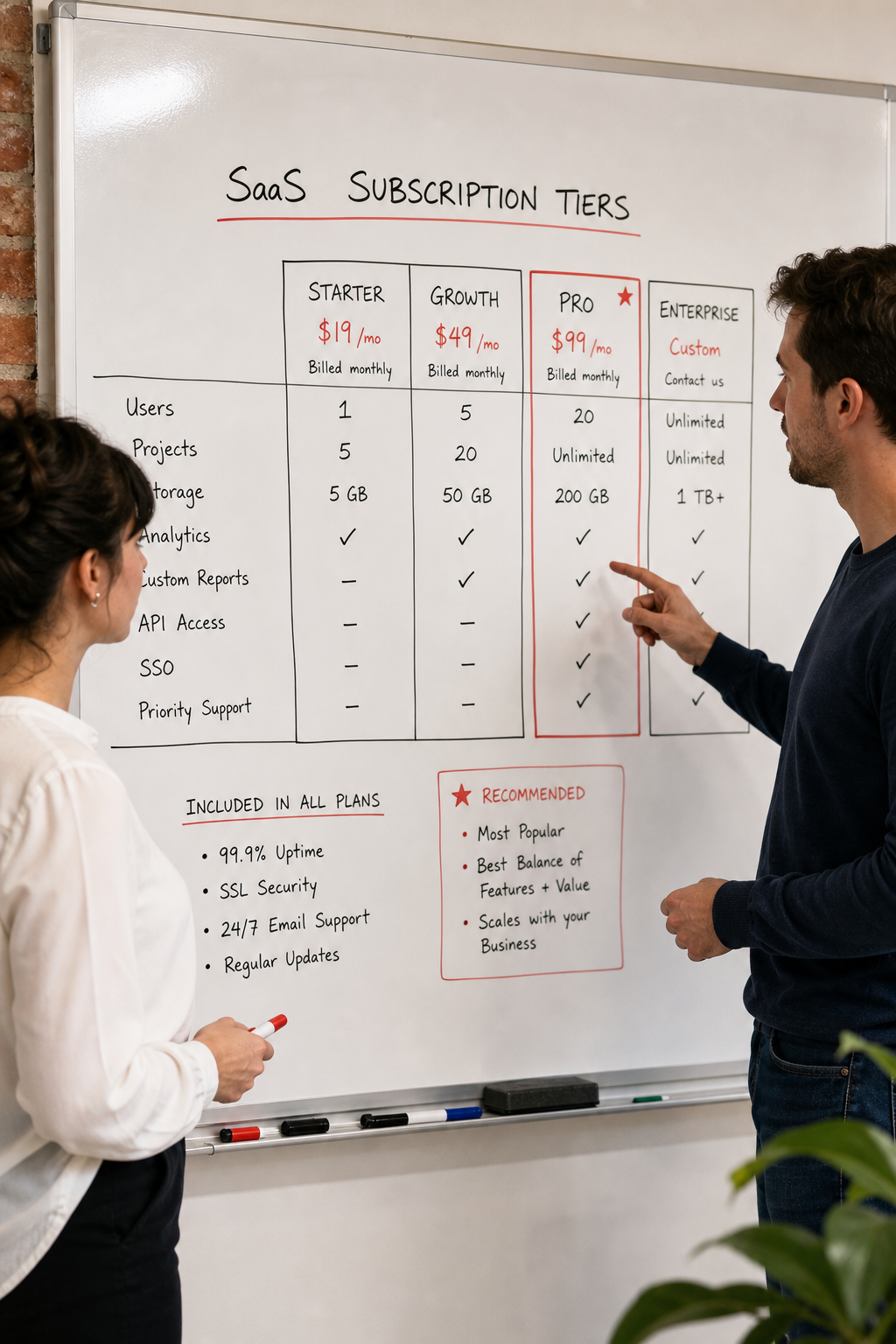
The platform’s strength lies in its visual pricing editor. You can create tiered plans where each tier has its own price and feature set, then publish the plan to a self‑service portal. Agencies love the ability to offer a “starter” tier for small clients and a “growth” tier that unlocks additional seats and API calls.
To make tiered pricing work, start by analyzing your typical client usage patterns. If most clients stay under 5,000 API calls a month, set the first tier at that level with a modest price. Then add a second tier at 10,000 calls with a discount per call, and so on. The tiered model only discounts the units in the higher tier, which can protect your margins while still rewarding larger spenders.
The platform also supports coupon codes that can be layered on top of tiered pricing, giving you a quick way to run promotions without re‑configuring the entire plan.
When you’re ready to compare, check out our deep dive on how multiple SaaS instances can share a single billing strategy: Best Tools for Volume Pricing for Multiple SaaS Instances. It shows real‑world examples of agencies using the platform alongside other solutions.

3. Enterprise‑grade volume pricing for agencies
The solution is aimed at large enterprises, but its volume pricing engine can be used by agencies that run dozens of client subscriptions. The platform lets you set a “volume discount” that applies to the entire bill once a usage threshold is crossed. For example, you might charge $30 per seat up to 50 seats, then drop the per‑seat cost to $25 for any seat beyond that.
What makes this offering stand out is the ability to combine volume discounts with complex revenue recognition rules. If your agency delivers professional services alongside the SaaS product, you can allocate revenue across multiple books without manual spreadsheets.
Below is a short video that walks through setting up a volume discount in the platform’s UI. Watch it to see the exact steps:
After the video, you’ll notice that the platform’s reporting layer shows both the pre‑discount and post‑discount totals, which is handy for agency accountants who need to justify pricing to clients.
While the platform offers powerful features, the pricing can be steep for smaller agencies. Consider whether the extra revenue‑recognition capabilities justify the cost.
4. Transparent subscription tiers for growing agency teams
The subscription platform provides three pricing models that are useful for agencies: tiered, volume, and stairstep. Tiered pricing lets you lower the per‑unit cost as a client’s quantity rises, while volume pricing applies a single lower rate to all units once a threshold is met. Stairstep pricing offers a flat rate within defined ranges, which can simplify budgeting for agencies that need predictable costs.
All three models are available on any plan, so you can start with a simple stairstep tier and later switch to a more granular volume model as your client base expands. The system also handles the math for you, so you never have to write custom scripts to calculate discounts.
According to the official documentation, tiered pricing “encourages customers to purchase more items to reach a lower price per unit, thereby potentially increasing overall sales volumes.” This aligns with agency goals of growing client spend while keeping the pricing structure clear.
When you set up a new plan, you define the tiers and the corresponding prices. The platform then automatically calculates the total at checkout. You can also enable the “Editable Quantity” option on the hosted checkout page, letting clients choose how many seats they need.
Here’s a quick checklist for agencies using the billing system:
- Identify the most common seat count among your clients.
- Set a volume threshold that gives a meaningful discount (e.g., 10% off after 15 seats).
- Test the checkout flow to ensure the discount appears correctly.
“The tiered pricing model lets agencies reward larger clients without manual invoicing,” notes the platform documentation.
The reporting tools also break down revenue by tier, so you can see how many clients have moved into higher‑discount brackets.
5. Discount platform, Simple, scalable discount programs for agencies
The discount platform (a unified billing solution) focuses on B2B SaaS billing and offers built‑in support for volume pricing. The model ties the per‑unit cost to predefined quantity ranges, and once a client crosses a range the new lower price applies to all units.
For agencies, this means you can promise a single price per seat that gets cheaper as the client adds more users. The platform also lets you run A/B tests on different discount thresholds, so you can find the sweet spot that drives adoption without eroding profit.
The platform’s dunning management and automated invoice generation reduce the overhead of handling many client contracts. It also integrates with popular CRMs and payment gateways, keeping the tech stack tidy.
post on volume pricing, “customers today are more conscious than ever about getting value for what they pay.” The platform’s approach directly addresses that concern by making the discount transparent on the checkout page.
Another advantage is that the solution supports both volume and tiered pricing, so you can start with a simple volume discount and later migrate to a tiered model if you need more granularity.
FAQ
How do volume discounts differ from tiered pricing?
Volume discounts apply a single lower unit price to all units once a threshold is reached, while tiered pricing only discounts the units that fall within each higher tier. For an agency, volume discounts are easier to explain to clients because the price per seat drops uniformly after a set point, whereas tiered pricing can result in mixed rates across a single invoice.
Can I combine multiple discount models on the same platform?
Yes. Many billing platforms let you layer coupon codes on top of volume or tiered pricing. This gives you flexibility to run limited‑time promotions without redesigning the core pricing structure, which is useful when you have seasonal client acquisition spikes.
What should I look for in a billing platform’s reporting features?
Key reports include MRR by tier, discount usage, and churn broken out by discount group. You also want exportable CSVs for your finance team and the ability to segment revenue by client size, so you can see how volume discounts are affecting overall profitability.
Is it worth paying for a premium billing tool if I’m a small agency?
Often it is. Even small agencies benefit from automation that prevents manual invoicing errors. Advanced billing tools automate tax calculation, dunning, and discount application, saving hours each month that can be re‑invested in client work.
How can I test a new discount tier before rolling it out to all clients?
Set up a sandbox environment or a hidden test plan in your billing system. Invite a few trusted clients to join the test plan and monitor adoption, revenue impact, and support tickets. Most platforms let you toggle the test plan on and off without affecting live subscriptions.
Do these platforms support multi‑currency billing for agencies with global clients?
Most billing platforms support multiple currencies either natively or via integration with a payment gateway. Check the documentation for currency conversion fees and how they handle exchange‑rate updates to avoid surprises on your invoices.
Conclusion
Choosing the right pricing engine can turn a chaotic billing process into a growth engine for your agency. A flexible volume‑break engine shines with its simple volume‑break logic and global payment support. A visual tier editor makes it easy to craft client‑specific packages. An enterprise‑grade revenue solution brings enterprise‑grade revenue recognition for agencies handling large contracts. A multi‑model pricing system gives you three clear models, tiered, volume, and stairstep, so you can pick the one that matches your client base. A robust discount simulation tool rounds out the list with flexible discount simulations and strong dunning tools.
While each platform has strengths, agencies that need transparent, scalable discounts should start by mapping their client growth path and then matching it to the pricing model that best aligns with that trajectory. If you want a solution that combines instant AI agent deployment with built‑in RBAC, audit logs, and clear volume discounts, Donely’s pricing page shows how you can start free and scale without hidden fees.
Ready to eliminate billing guesswork and give your agency a pricing advantage? Try Donely free →